

Violet
100ml pot£5.95


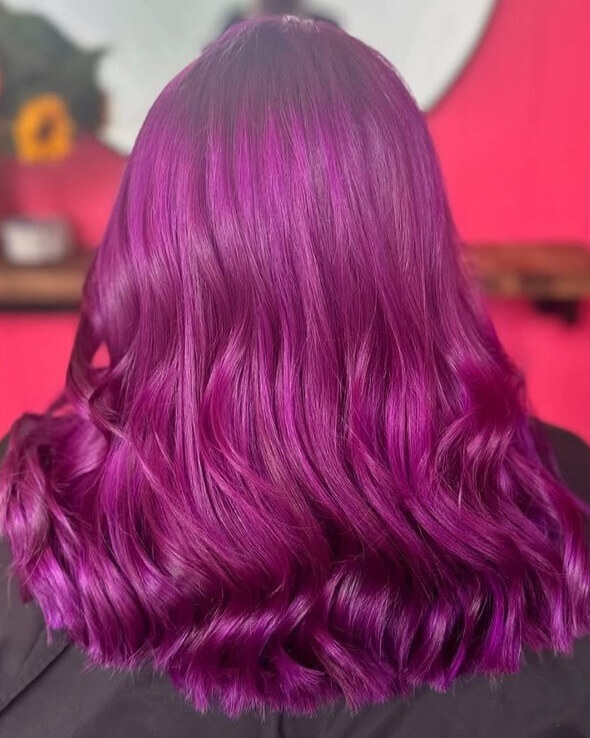
Bold, creative and endlessly versatile, purple is one of the most sought-after alternative hair colours. From soft lavender and lilac hues, to vivid violets and rich plum shades, here’s everything you need to know about finding, applying and caring for your preferred purple hair dye.
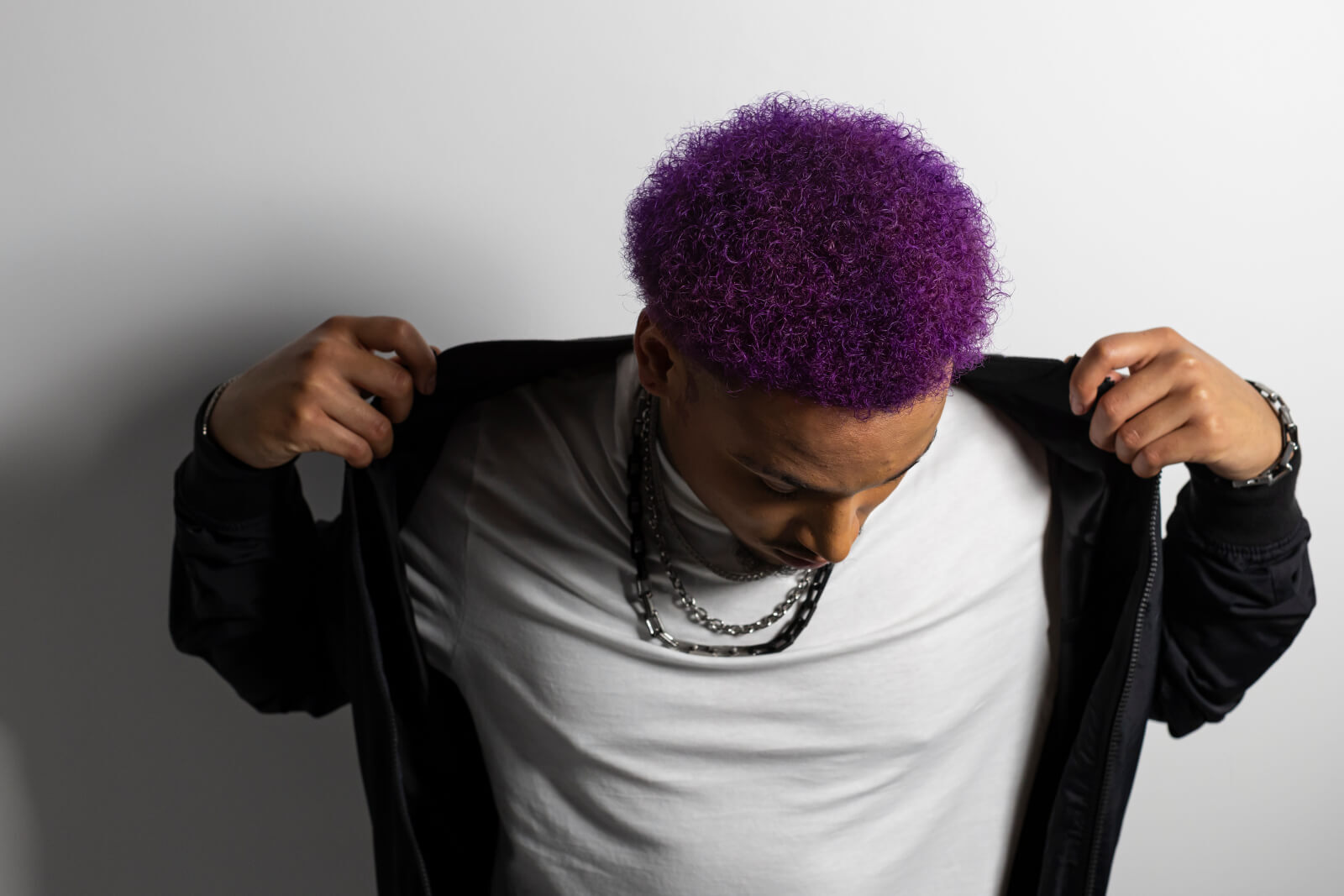
Purple covers a broad spectrum of shades. Delicate lavenders, lilacs and mauves. Bright fuchsias and orchids. Deep plums, violets and indigos. This incredible variety means there’s a perfect purple for everyone, and finding yours depends largely on your natural features and personal style.
Skin tone plays a big role when choosing the right purple hair colour. You want a tone that complements your complexion and enhances your natural features – not one that makes your skin appear washed out.
Here’s a quick guide to what purple shades pair best with different skin tones and undertones:
Remember that this is only a recommended guide. The broad diversity of purple hair colours means many shades show up well on multiple complexions. So feel free to experiment with different shades of purple until you find those that enhance your natural features and suit your own inimitable style.
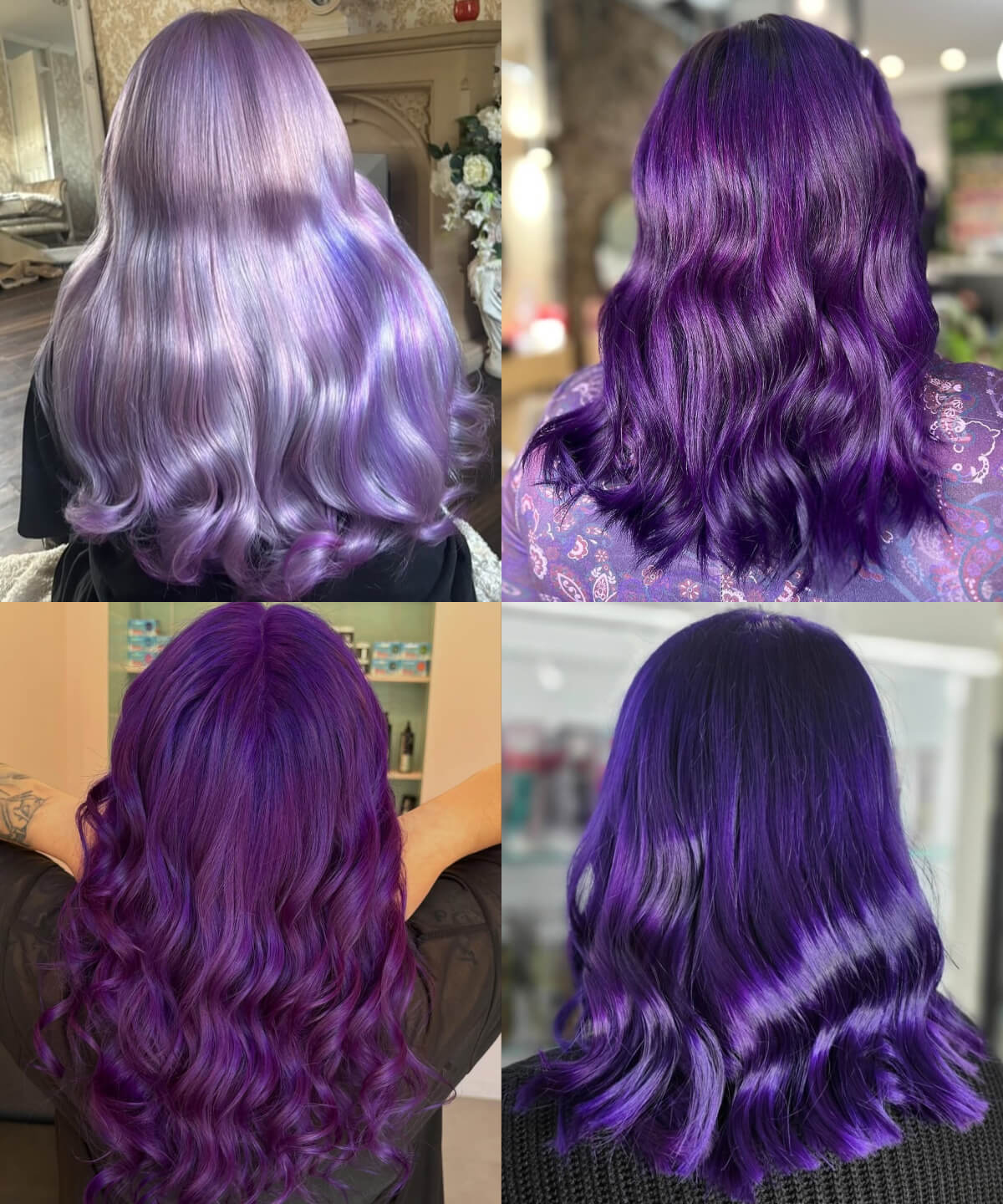
Does your natural hair colour lean more to the light or dark side? This will also influence what shades of purple are available to you if you wish to apply it directly to your untouched base.
If your hair is on the darker end of the colour spectrum (Level 1-3), we highly recommend using a hair lightening kit before dyeing your hair purple, especially if you’re interested in applying a lighter or fluorescent tone.
However, some darker, deeper shades of purple can still show up on dark brown hair, or at least leave a subtle, sleek tint.
A pale blonde base (Level 9-10) is the perfect canvas for every shade of purple hair colour. As it’s already light, purple shades can show up true to tone with little to no lightening. This allows you to make the most of tones like:
Be aware that because purple and yellow are at opposite ends of the colour wheel, a yellow or brassy blonde can skew purple into a muddy or grey colour. A toned, cool blonde base gives the cleanest result.
How dark your brown hair is will determine what shades of purple you can apply effectively without pre-lightening. If you have light brown hair, vivid purple tones can work, including:
These shades tend to blend more seamlessly with the warm undertones in light brown hair. For darker brown bases, only the deepest shades of purple will show up strongly, such as:
If you choose to dye your naturally black hair purple without any pre-lightening, even the darkest shades will likely appear as a subtle tint or shimmer of purple, rather than a complete colour transformation. For more all-over, true-to-tone results, we highly suggest using a hair lightening kit before dyeing.
However, if you prefer a black hair colour with purple undertones, you may be interested in trying our Black Amethyst shade – part of our Rich Naturals range.
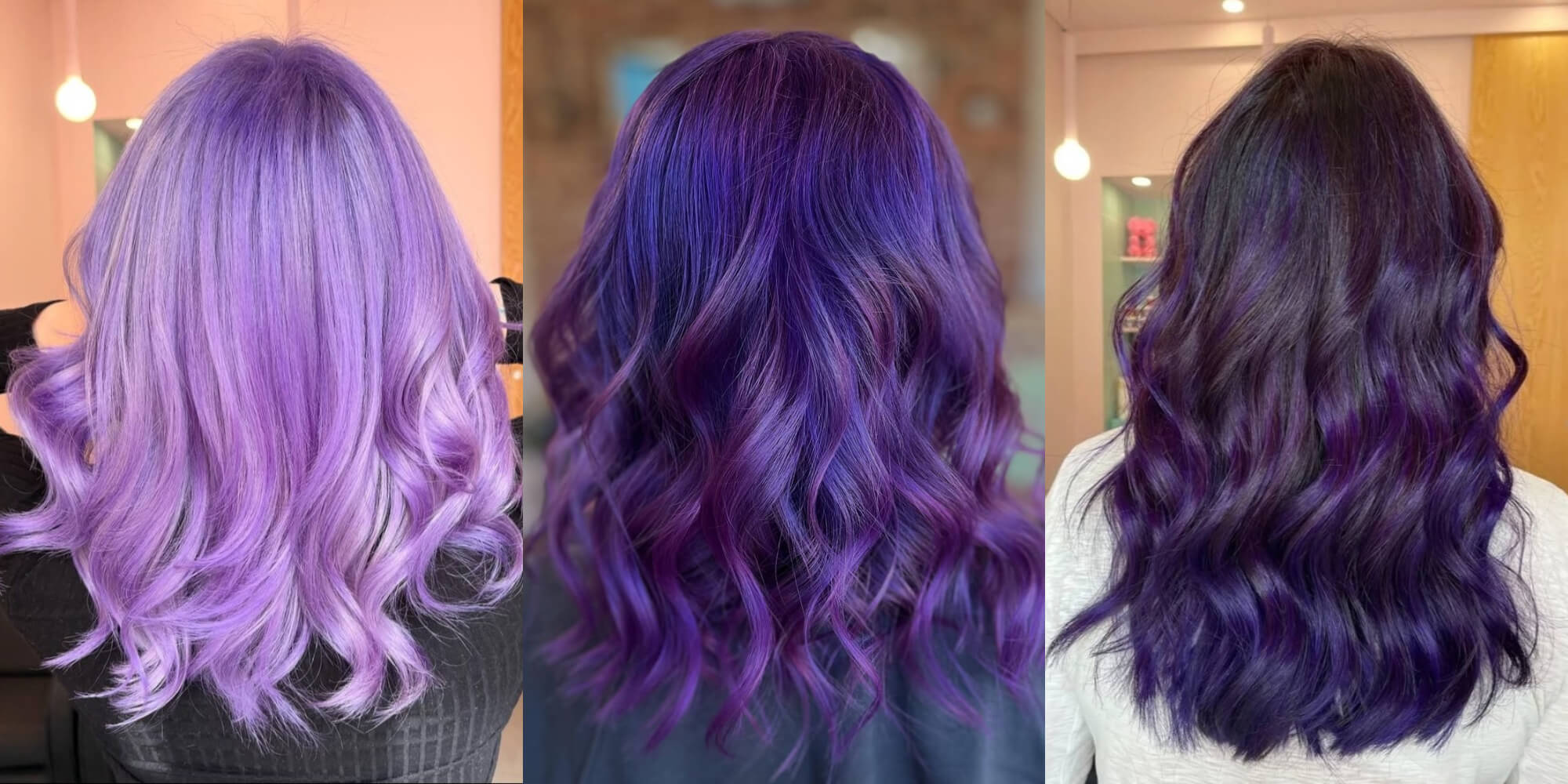
Now you’ve had a chance to consider what shade of purple is perfect for your skin tone, style and natural hair colour, here we’ll run down our step-by-step instructions for dyeing hair purple at home:
For very pale, pastel purple hair – even paler than our Lavender, Lilac or Wisteria shades – we recommend mixing your chosen colour with one of our hair toners or conditioners.
All Directions semi-permanent hair colours are fully mixable, giving you the freedom to lighten our purples to create completely custom shades. Our Antique Mauve colour is particularly effective for lightening purple hair colours due to its purple base.
If any purple dye transfers onto your skin while colouring, wipe it away quickly using a soft cloth or cotton pad dampened in warm water. The faster you act, the less chance the pigment has to settle into your skin.
For more stubborn purple stains, try using micellar water, a gentle facial cleanser or a cleansing oil to break down the colour. Gently massage it in small circular movements, then rinse with warm water.
Should purple hair dye get onto your clothes, first rinse it under cold running water, working from the back to lift it from the fabric. Then apply a liquid detergent or stain remover to the area, wait a few minutes for it to settle, then put your clothes in the wash.
For stains on carpets, upholstery or other soft furnishings, gently blot the affected area with a clean cloth, then dab it with a mix of warm water and either a mild detergent or diluted white vinegar. Avoid rubbing the area too firmly, as this can cause the stain to spread further.
You want your purple hair colour to stay perfect for as long as possible. By its very nature, semi-permanent purple hair dye won’t last forever – but there are things you can do to keep your purple vivid and vibrant for longer:
Directions purple hair colours do not have a specific longevity on the hair, as this depends on several factors:
Following our suggestions in the previous section, such as washing less frequently with cool or lukewarm water, maximises the longevity of your purple hair colour, no matter how soft or delicate it is. Plus, we encourage our customers to top up their colour once it fades, so your look stays fresh and fierce.
Not when you choose Directions. Directions semi-permanent hair colours are formulated with conditioning ingredients to help leave hair feeling soft and looking vibrant after colouring.
Avoid permanent purple hair dyes if you value the health and softness of your hair. As these typically contain harsh chemicals like ammonia, peroxide or PPDs to achieve a permanent colour, they tend to make hair more brittle and susceptible to damage.
One of the biggest advantages of Directions is that our colours are fully mixable. This allows you to blend our purple shades together or with others in our Vivids and Rich Naturals ranges for your own custom colours.
While we encourage you to experiment to your heart’s content, here are some colours that blend the best with our purple tones:
We suggest you avoid mixing purple with yellow, orange or green hair dye. As these sit roughly opposite purple on the colour wheel, they tend to neutralise purple when blended, producing muddy brown or grey tones.
When mixing colours at home, remember:
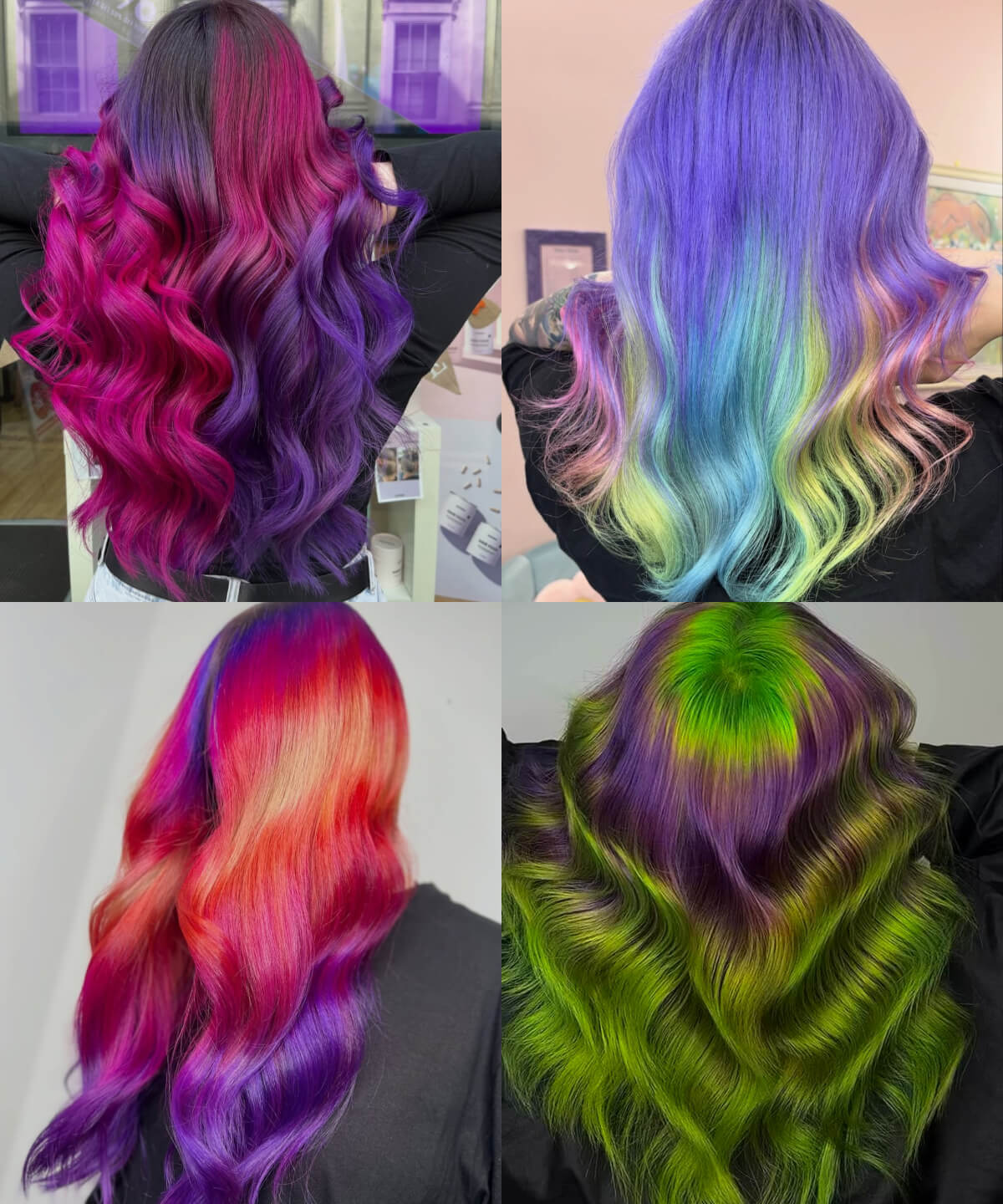
Purple is a popular option for multicolour, split-dye effects because it effortlessly complements a wide range of other shades. Whether you’re looking for a subtle dimension or a striking contrast, here are our favourite purple pairs:
There is no hard-and-fast answer, but you almost certainly won’t get a true purple. Instead, you’ll get some flavour of red-violet as the red pigment will mix with the purple introduced.
A deep, saturated violet or plum dye has enough pigment to combine with the red into a rich burgundy or magenta-purple. However, a light or pastel lavender will lose the fight to the pre-existing red; at most, it may be slightly muted or have a faint cool cast.
Is it the end of your purple reign? If you want to speed up your transition to another colour, here are some tips to get purple hair dye out of your hair faster:
Please avoid using bleach or colour strippers at home unless advised by a professional – these can dry out your hair and lead to uneven results when the purple lifts.
Whether you love delicate lavender hues, rich violet tones or deep, dramatic burgundies, purple is one of the most versatile colours for showcasing your style and creativity.
At Directions, our purple hair colours are designed for self-expression in all its forms. From soft, ethereal shades to bold, high-impact hues that command attention, there’s a purple for every personality.
Explore everything from the subtle beauty of Lilac and Lavender to the vivid intensity of Violet and Plum. Whatever your style, our vegan-friendly, conditioning formulas help deliver beautiful colour while leaving hair feeling soft, silky and full of shine.
Browse our complete range of semi-permanent purple hair dyes today, and be sure to tag us on social media to show off your latest colour creations!

Want to tackle the brassy tones that emerge after lightening or colouring your hair? Then it’s time you became familiar with hair toners. In this essential guide, we’ll explain what hair toners do, when to use them, and how to apply them for the best possible results.


It’s time for a glow-up! Fluorescent hair is designed to light up any look, whether it’s shimmering in the sunlight or beaming under festival blacklights. In this essential guide to fluorescent hair dye, you’ll learn how to find your signature neon shade, apply it safely and effectively, and keep your glow going for as long as possible.

They say blondes have more fun… and it’s easy to see why! From sun-kissed golden and honey hues, to soft, sophisticated champagne tones – blonde is the shade that never goes out of style. In our ultimate guide to blonde hair dye, we’ll show you how to find the blonde with your name on it, apply it like a pro, and keep your shade bright, bold and full of life.

Forget everything you thought you knew about grey hair – this isn’t a colour to cover up; it’s one to embrace. From the soft shimmer of silver to smoky ash and charcoal tones, the right grey adds a cool, sophisticated edge to any look. Here, we’re going to help you get the most from grey hair dye, from choosing your ideal shade to keeping your colour looking sharper for longer.

Warm, radiant and full of fire – copper is one of the trendiest hair colours right now, and a shade that never fades into the background. From bright and intense to cool and classic, there’s a copper to suit every style. In our ultimate guide to copper hair dye, we cover everything from picking your perfect tone to keeping your colour glowing for longer.

Yellow is anything but mellow. A colour that dazzles, glows and pops in every situation, yellow is the shade made for those who live to light up the room. In this essential guide to yellow hair dye, we’ll share our top tips for choosing your perfect tone and helping it shine all morning, noon and night.
Sign up to the Directions newsletter and get special offers, updates and more straight to your inbox. Unlock huge savings, get top tips and stay on top of the hottest colour trends now.
We care about your data. Read our privacy policy.


